Staff augmentation services in the Netherlands provide on-demand access to specialized IT talent, allowing tech companies to integrate pre-vetted engineers directly into their existing in-house teams. By replacing lengthy local recruitment cycles with flexible, variable-rate scaling, this model eliminates skill gaps, accelerates software delivery, and protects core teams from operational burnout.
Scaling software teams effectively in the Dutch tech market requires balancing velocity with strict cost control. Traditional recruitment for specialized roles like Cloud Infrastructure Engineers, Go Developers, or Data Architects often takes months, leading to missed market opportunities, delayed product launches, and skyrocketing operational overheads.
Instead of locking your company into permanent, fixed-cost hires, IT Staff Augmentation allows enterprise CTOs and VPs of Engineering to dynamically adjust engineering capacity to match sprint goals and market shifts.
Why Traditional Tech Recruitment Hits a Ceiling in the Netherlands
The competitive Dutch tech market faces an ongoing shortage of senior-level engineering talent. Relying exclusively on local hiring channels introduces significant operational risks:
-
Extended Time-to-Hire: Filling specialized senior roles locally can take 90+ days, grinding project momentum to a halt.
-
Elevated Fixed Overhead: Permanent hires increase long-term commitments, including pension contributions, local employment taxes, and onboarding friction.
-
Compounding Technical Debt: Unfilled engineering roles force existing teams to take shortcuts, increasing technical debt a problem that can consume up to 40% of an annual IT budget.
Firms utilizing staff augmentation services in the Netherlands bypass these friction points by extending their internal teams with pre-vetted external experts who deliver immediate productivity from day one.
Staff Augmentation vs. Traditional IT Outsourcing
Understanding the operational differences between augmentation and project outsourcing is critical for technical decision-makers:
| Feature |
IT Staff Augmentation |
Traditional IT Outsourcing |
| Team Management |
Direct control by your internal CTO / Tech Lead |
Managed independently by an external vendor PM |
| Operational Integration |
Embedded directly into your Jira, Slack, and CI/CD pipelines |
Operates in an isolated, external environment |
| Flexibility |
Scale individual roles up or down sprint-by-sprint |
Fixed-scope contracts with complex change orders |
| Code Base Ownership |
Full, real-time visibility and direct IP retention |
Milestone-based code handoffs at project completion |
Practical Framework for Integrating Augmented Teams
Integrating augmented developers requires a structured onboarding framework to guarantee rapid productivity gains and seamless cultural alignment.
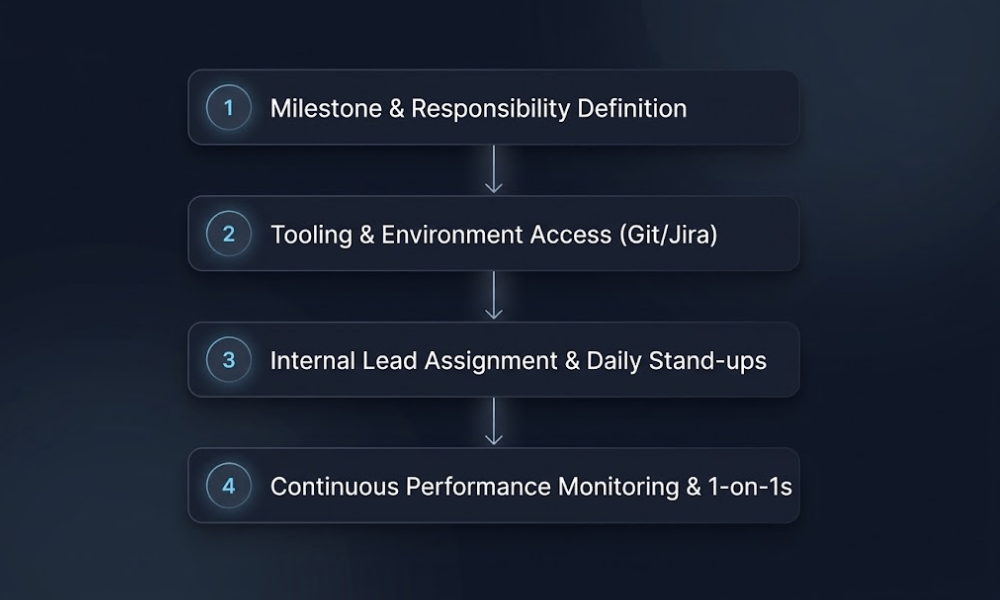
Integration Action Items:
-
Define Clear Deliverables: Establish individual ticket ownership and sprint milestones prior to developer onboarding.
-
Standardize Tooling Access: Provide access to version control systems (e.g., Git), communication platforms (Slack/Teams), and staging environments on day one.
-
Assign an Internal Technical Mentor: Pair augmented engineers with an internal lead to facilitate domain knowledge transfer and code review alignment.
-
Implement Feedback Loops: Conduct bi-weekly 1-on-1s to maintain alignment with core architecture standards and team velocity goals.
Standard Architectural Topology for Scaled Enterprise Systems
Enterprise applications scaled using augmented engineering teams in the Netherlands typically adopt containerized, microservice-based topologies designed for high concurrency and resilience:
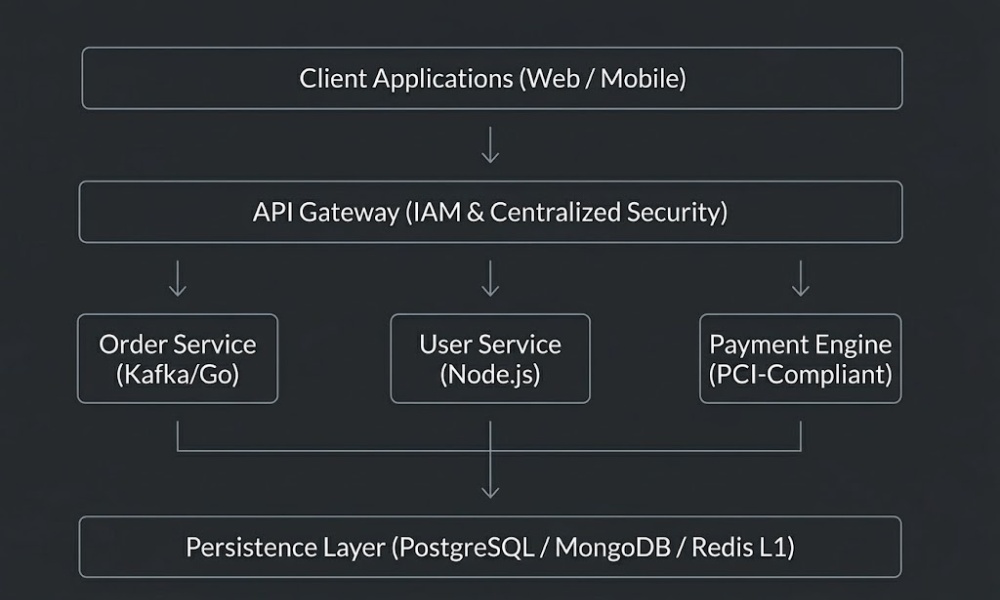
Core Infrastructure Components:
-
Microservices Architecture: Independent services communicating via RESTful or gRPC APIs to enable modular scaling and isolated deployments.
-
Orchestration & Containerization: Docker containerization managed via Kubernetes clusters on cloud infrastructure (AWS, Azure, GCP) to cut resource overhead by up to 20%.
-
Asynchronous Messaging: Event-driven architectures powered by Apache Kafka or RabbitMQ to ensure transactional data consistency across distributed services.
-
Observability Stack: Centralized metrics monitoring using Prometheus and Grafana to maintain 99.99% system uptime.
Moving from Technical Debt to a Scalable Engineering Roadmap
Unaddressed technical debt slows feature delivery, increases maintenance costs, and traps senior developers in reactive firefighting. For enterprise teams in the Netherlands, scaling headcount without first auditing underlying architectural bottlenecks only compounds existing inefficiencies.
Bugloos provides an objective Code & Architecture Audit to evaluate your codebase, identify integration bottlenecks, and uncover security vulnerabilities.
Frequently Asked Questions
What are staff augmentation services in the Netherlands?
Staff augmentation services integrate external, highly specialized technical professionals directly into your internal engineering team on a flexible basis. This allows Dutch businesses to bridge critical skill gaps, accelerate delivery timelines, and scale headcount without traditional hiring overheads.
How does staff augmentation differ from traditional software outsourcing?
With staff augmentation, external developers work under your direct management, using your tools, workflows, and communication channels. In traditional outsourcing, an external vendor manages the entire project independently with minimal day-to-day oversight from your internal team.
What are the main financial benefits of IT staff augmentation?
It converts fixed long-term employment expenses (salaries, pensions, taxes) into flexible, variable project costs. You pay exclusively for the specific skills and hours required, optimizing operational expenditures during rapid scaling or project-based sprints.
How do you maintain code quality when bringing in augmented developers?
Code quality is maintained by enforcing standard internal pull request (PR) reviews, automated CI/CD testing pipelines, and pairing augmented staff with internal Lead Engineers. Detailed onboarding documentation ensures immediate adherence to your team’s coding standards.