

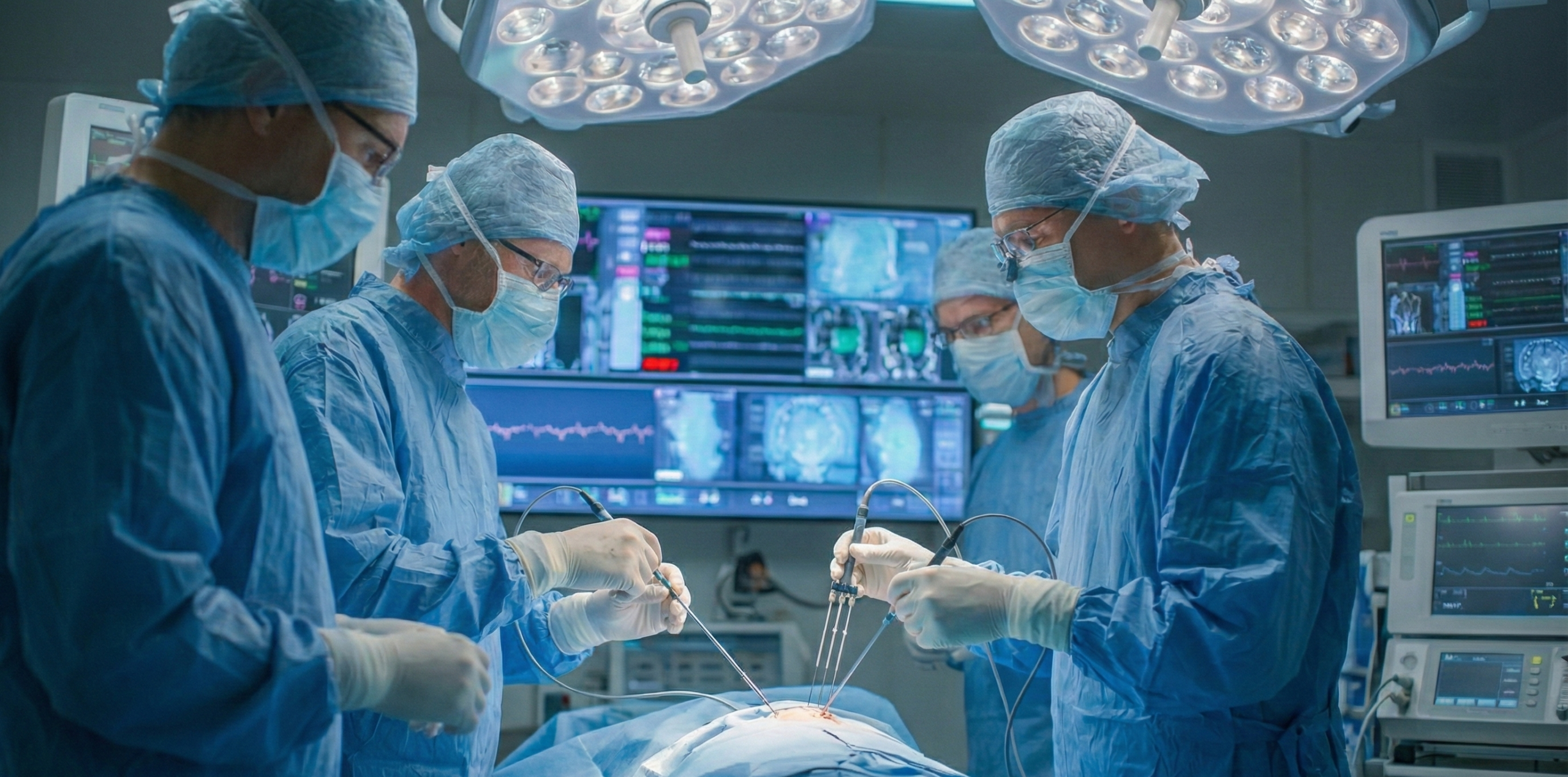
We often discuss the technical side of healthcare software development, but we rarely talk about the human cost of bad software. The reality in the medical field is stark. According to a study published in the Annals of Internal Medicine, for every hour a physician spends with a patient, they spend nearly two hours on EHR software development and administrative desk work.
This imbalance is a leading cause of clinical burnout. When software is clumsy, unintuitive, or unconnected, generic systems effectively convert doctors into data input clerks. The issue is more than just “wasted time”; it creates a physical barrier between the doctor and the patient, increasing the risk of medical mistakes.
In this article, we will explore the real challenges of specialised care and detail exactly how custom medical software solves them, using a real-experiment project as proof.
Where Generic Healthcare Software Development Breaks Down the Optimisation
The root cause of frustration in hospitals today is often that specialised clinics are trying to force complex medical workflows into generic software. When you step outside of general practice, standard software creates four specific roadblocks where custom medical software becomes the only viable path.
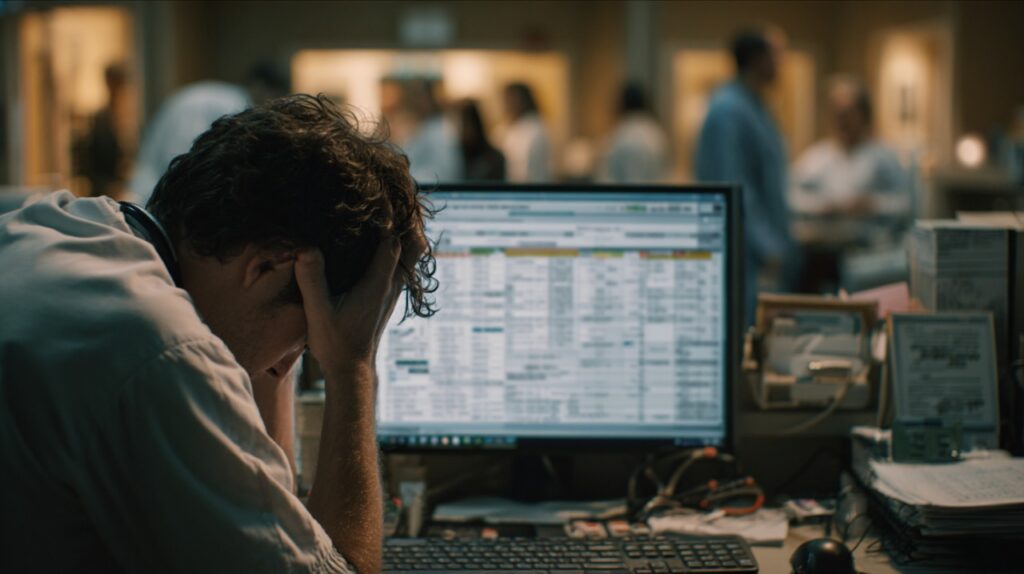
A major study published in the Annals of Internal Medicine found that for every single hour a doctor spends face-to-face with a patient, they spend nearly two hours stuck at a desk dealing with health record software and paperwork. This imbalance is a huge reason why so many doctors feel completely burned out. When software is clunky or hard to use, it turns highly trained specialists into data entry clerks. The issue isn’t just about wasted time, it creates a literal computer screen between the doctor and the patient. This distraction makes it harder to focus and increases the chance of making medical mistakes.
Standard software, however, makes users click through endless tabs and type into dozens of boxes just to log a simple note. Research shows that the average doctor makes over 4,000 keyboard clicks during a single shift just to keep up with system requirements. This constant typing breaks their concentration right when they need it most.

1. The Workflow & Focus Barrier: “Data Entry Distracts from Care”
In specialised treatments like Electrochemotherapy (ECT), the treatment process involves multiple stages from admission to post-treatment follow-ups. The critical challenge occurs inside the operating room. Doctors and nurses need to remain 100% focused on the patient. Standard software, however, demands complex manual data entry. It forces medical staff to shift their attention from the patient to a screen, typing in endless forms. This lack of speed and ease of use disrupts the flow of the operation and increases the chance of administrative burnout.
2. The Data Cost Struggle: “Medical Images Bloat the System”
Tracking the progress of cancer treatments is visual. Doctors need to document the affected area with high-resolution images to compare recovery stages over time. This creates a massive “Data Cost” challenge. Storing thousands of high-definition medical images on servers is expensive and inefficient. Standard hospital apps rarely optimise this data; they simply upload the raw files. This leads to bloated servers, high operational costs, and slow retrieval times when a doctor tries to load a patient’s history on a mobile device.
3. The Infrastructure Gap: “The Internet is Unreliable”
Medical data recording cannot stop just because the Wi-Fi signal drops. In many treatment centers, internet access is limited or unstable. Most standard SaaS (Software as a Service) platforms are cloud-only. If the connection fails, the software locks up. This poses a significant risk to real-time data entry, leaving doctors unable to record vital treatment information or access patient records when they are needed most.
4. The Awareness & Access Barrier: “Patients Are Lost”
To make treatments less intimidating, custom software includes easy-to-use websites and apps for patients. These tools explain medical procedures in plain language, offer simple appointment calendars, and let patients fill out their check-in forms at home in their own language. This removes the stress of getting care.
How Healthcare Software Developers Engineer Efficiency
To fix these specific issues, we cannot simply install an off-the-shelf app. We must look at the deeper friction between human behaviour and machine requirements and design specific technical bridges. Here is how expert healthcare software developers solve these high-stakes problems.
1. Custom Healthcare Software Development using “Context-Aware Automation”
Context-Aware Automation: The solution to a distracted surgeon is not a better keyboard; it is no keyboard. We utilise “Context-Aware Automation” by integrating specialised AI Agents. Instead of forcing the doctor to interact with the software, the AI acts as an intelligent scribe. It listens to the room or processes inputs automatically to fill in the necessary forms. The software does the work in the background, allowing the surgeon to focus 100% on the treatment.
2. Medical Device Software Development via “Data Efficiency Engineering”
Image Compression Algorithms: The solution to bloating image data isn’t just buying more storage; it is “Data Efficiency Engineering.” This involves writing custom code that optimises how data is packaged. We can develop custom Image Compression Algorithms that shrink file sizes massively while keeping the visual fidelity (diagnostic quality) perfect. The result is a system that feels instant and lightweight on any tablet, despite handling gigabytes of medical imagery.
3. Healthcare Software Developers in Prioritising “Resilience Over Connectivity”
Resilience Over Connectivity: The solution to unreliable internet is “Resilience Over Connectivity.” We build an Offline-First Architecture. This means the software’s core logic lives on the device itself. The app records all data locally first. It doesn’t matter if the Wi-Fi cuts out for an hour; the doctor keeps working. The system then automatically syncs to the server only when the connection is stable, guaranteeing zero data loss.
4. Custom Medical Software focused on “Information Accessibility”
Information Accessibility: The solution to patient fear is “Information Accessibility.” We lower the cognitive barrier by developing Multilingual Web & Mobile Apps. These tools explain treatments and manage appointments in the patient’s native language. This transforms a scary medical procedure into a manageable journey, empowering the patient to be a partner in their own care.
The Hidden Financial Cost of Generic Healthcare Software Development
When a clinic relies on poorly designed systems, it isn’t just frustrating for your staff. it is incredibly expensive. The financial losses caused by flawed healthcare software development ripple through a medical practice in ways that do not always show up on a simple software receipt.
Here is what clunky medical software actually costs the healthcare industry and individual clinics:
Billions Wasted on Disconnected Systems: Administrative confusion and system errors waste a staggering $265 billion every single year. A massive chunk of that $30 billion is lost simply because different medical software programs cannot talk to each other. Instead of smooth, automated data sharing, clinic staff waste hours manually re-typing files, making phone calls, and tracking down missing information.
The High Price of Physician Burnout: The single biggest hidden expense for any clinic is losing good people. Burnout driven by bad software costs the healthcare industry $4.6 billion a year due to reduced hours and doctors leaving the profession. When a specialized doctor quits because they are tired of fighting with their computer, replacing them costs a clinic between $800,000 and $1.3 million. This includes paying for recruitment, training a new hire, and losing money from canceled appointments while the position sits empty.
The Cost of Everyday Medical Mistakes: When doctors are exhausted by paperwork and staring at a screen instead of the patient, mistakes happen. Studies show that a doctor facing severe software burnout is twice as likely to make a patient safety error. For a clinic’s bank account, these errors turn into delayed insurance payouts, denied claims, and potentially devastating legal fees.
Ultimately, trying to save money by avoiding custom healthcare software development usually ends up costing a clinic far more in the long run through lost time, billing errors, and exhausted staff.
Top 3 Trends in healthcare technology software development (2026)
Medical practices are walking away from rigid, old-fashioned software. Software is moving from being a digital filing cabinet to an active helper. New tools can automatically highlight unusual changes in a patient’s chart or flag dangerous drug combinations before they happen. Any custom software company worth its salt is currently tracking these three trends that are moving the industry away from standard tools:
- AI-Driven Diagnostics: Doctors don’t want more data; they want insights. The trend is moving from simple data entry to intelligent assistance, where AI highlights anomalies automatically.
- Internet of Medical Things (IoMT): The future is connected. The ability to pull data from a patient’s wearable device or a treatment machine directly into their medical file is becoming a standard expectation.
- Hybrid Care Models: The distinction between “Telemedicine” and “In-Person” is vanishing. Clinics need fluid systems that manage a patient’s journey seamlessly across both physical and digital spaces.
Making the Right Choice for Your Clinic
Healthcare software development is not about writing code; it is about understanding the human struggle in the hospital and building a bridge over it. If you are struggling with a workflow that feels broken, ask yourself: Is the problem the process, or is the problem the software? When you are innovating, dealing with complex devices, or simply cannot afford to have your doctors acting as data entry clerks, generic tools often become the bottleneck. Good medical software is about understanding how stressful a day in a hospital can be and building tools that make that day easier. By focusing on the human element with custom medical software, you will reduce burnout, ensuring safety, and empowering patients. We, we can turn technology from a burden into a cure.