

Many executive boards treat travel agency software as a minor line-item or a standard marketing trend. This assumption is a major mistake that directly drains operational efficiency and destroys technical margins. Most engineering departments are quietly struggling with fragile infrastructure and systems that fail to deliver a clear return on investment. The reality is that building or scaling without a rigorous structural blueprint always results in deep technical debt. What is the fundamental root cause behind these compounding development bottlenecks? It comes down to a clear misalignment between long-term engineering choices and short-term commercial growth strategies.
Enterprise software environments cannot survive on quick fixes or temporary operational workarounds. When a system relies on poorly integrated code bases, everyday engineering tasks slow to an absolute crawl. This friction directly extends your sales cycles and makes it incredibly difficult to validate technology investments to stakeholders. Senior stakeholders want to see reliable software deployment pipelines and stable system architecture, not endless patches. Why do so many promising technology roadmaps collapse under their own weight within the first year? They fail because development teams prioritize rapid feature delivery over fundamental core architectural stability.
Resolving this systemic problem requires moving far beyond surface-level code cleanups and standard framework refactoring. True technical efficiency means designing infrastructure that directly handles complex enterprise workflows while protecting your underlying margins. Incorporating your core objective of travel agency software directly into everyday architecture is the only way to eliminate hidden operational leaks. This guide breaks down the precise steps needed to transform unstable codebases into highly predictable, secure, and profitable software ecosystems. The goal is to move past modern software hype and build sustainable systems that actively drive business growth.
If you are looking for a complete overview of features for your agency, check out our “Ultimate Guide to Travel Agency Software“.
Redesigning System Architecture to Eliminate Legacy Engineering Friction
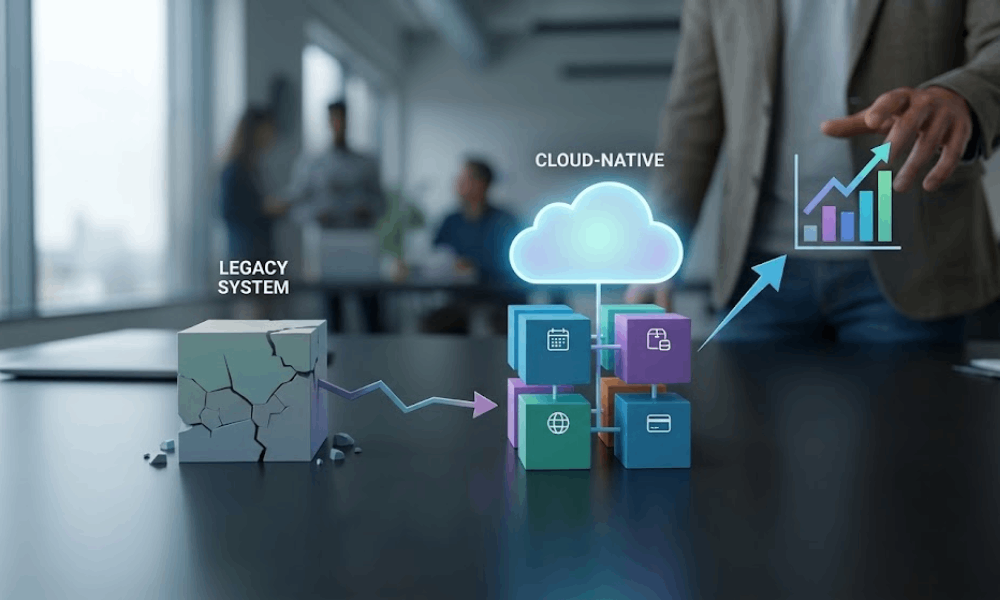
Legacy software setups often act as a massive anchor that stops enterprise technical teams from moving quickly. When ancient databases and outdated microservices are forced together, modern development speeds drop significantly. This exact technical debt makes modernizing your travel infrastructure, scaling booking engines, and integrating complex APIs into your regular workflows incredibly difficult and expensive. Engineering teams end up spending most of their valuable time fixing repeating infrastructure bugs instead of building profitable features. How do you break out of this exhausting cycle of reactive engineering and endless firefighting? You must implement strict architectural boundaries that isolate legacy components from your core operational services.
Building clean, decoupled API layers between old codebases and new features is the most reliable way to maintain code quality. This structural separation ensures that legacy vulnerabilities do not spread into your newly deployed systems and environments. It also gives your senior engineering teams the room they need to modernize backend code safely without breaking current user setups. The long-term commercial result of this design strategy is a highly resilient foundation that scales easily as user demand changes. What is the final outcome of isolating this technical friction? Your development team shifts focus from daily system survival to shipping high-value features that actively close enterprise sales deals.
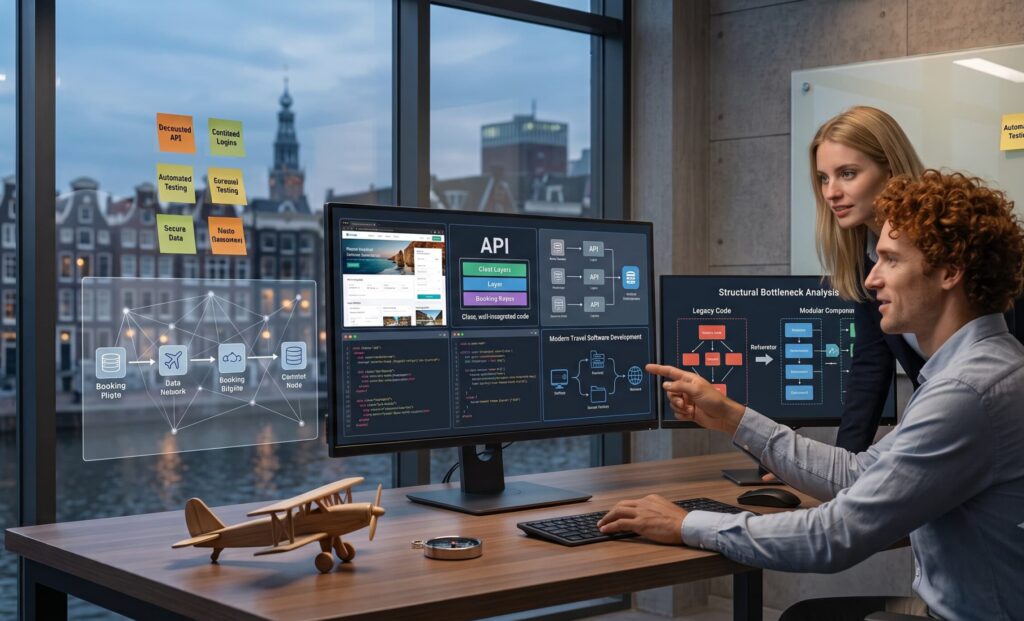
Proving the financial value of core technology upgrades to a cynical board of directors is a notoriously difficult task. Executives want to see clear financial returns and lower operational costs, not abstract metrics like code coverage or cleaner abstractions. To bridge this communication gap, tech leads must connect architectural health metrics directly to business outcomes like shorter software delivery cycles. This means tracking how fast teams ship software and measuring the direct financial impact of reducing system downtime. How can your development team systematically remove these costly bottlenecks while maintaining feature delivery? Following a highly structured, repeatable optimization process across your entire codebase is the answer.
- Audit your current production architecture to pinpoint exactly where system performance degrades under real workloads.
- Isolate complex legacy code behind simple, well-documented internal APIs to minimize dependencies across development teams.
- Automate code validation and security testing to catch breaking bugs long before they reach production servers.
- Align engineering sprints directly with high-priority business features to ensure development hours yield clear financial returns.
Implementing this workflow ensures that every technical change actively supports a broader corporate goal. It stops software developers from spending valuable time on over-engineered solutions that add zero actual value to your enterprise clients. Over time, this disciplined approach changes how the entire organization views engineering costs and structural software investments. Technical budgets stop looking like an unmanageable financial drain and start operating as a highly predictable growth engine. Realizing this balance is not a luxury for scaling firms; it is an absolute commercial requirement for survival.
Enforcing Strict Data Security and Regulatory Compliance Protocols
Modern enterprise platforms must handle complex data workflows without exposing sensitive client data to external threats. A single security failure can destroy corporate trust instantly and lead to massive regulatory fines from global oversight bodies. Security cannot be a secondary thought that engineers patch onto software right before a major release. It must sit at the very center of your structural design, guiding how data flows across every internal microservice. What is the most effective strategy for protecting systems without making day-to-day software development impossibly slow? The answer is implementing automated identity checks and strict data isolation policies across the entire network.
When building these secure systems, engineering leaders must design for worst-case scenarios across all external endpoints. This requires setting up continuous logging, secure data management, and strict access controls for all internal teams. These technical safeguards make identifying and neutralizing potential system vulnerabilities remarkably fast and efficient for operations teams. They also give enterprise clients complete confidence that their proprietary operational data remains fully secure around the clock. Protecting your platform this way preserves your market reputation while ensuring long-term compliance with evolving international data laws. True platform reliability is built on invisible, unyielding structural security, not surface-level promises.

Case Study Teaser: Scaling Travel Platforms with Smart Architecture
Operating in the high-stakes travel sector means dealing with massive data flows, real-time supplier rules, and unforgiving performance expectations. When German tourism specialists OH.tec and TraSo partnered with Bugloos, their growth was being hindered by tangled legacy code, database bottlenecks during peak traffic, and high per-request API costs. Internal engineering teams were bogged down by manual deployments, leaving little room for strategic innovation while trying to process millions of complex travel records.
To break through these operational bottlenecks, Bugloos engineered a complete structural overhaul. We decoupled fragile backend connections using a modern API layer, implemented intelligent search caching to dramatically slash supplier API costs, and built automated pipelines that completely eliminated human error from weekly rollouts. The result was a seamless, high-speed booking platform that delivered exceptional uptime for travelers and a robust, scalable backend system for our partners.
| The Challenge | Our Solution | Key Impact |
| System Slowdowns | Decoupled legacy database & API layer |
Peak stability during traffic surges
|
| Manual Deployments | Built automated CI/CD pipelines |
4x faster software rollouts
|
| High Search API Fees | Implemented smart caching mechanisms |
Significant operational savings
|
| Double-Bookings | Real-time inventory sync & rule engine |
Zero double-bookings & smooth UX
|
This engagement highlights a critical rule of modern corporate infrastructure design: real scaling requires eliminating hidden code dependencies. Trying to build advanced features on top of a broken structural foundation is a guaranteed waste of engineering capital. True technical agility is achieved by creating simple, predictable data paths that developers can modify without breaking adjacent services. When you clean up internal communication paths, software testing becomes simpler and operational costs drop naturally. Businesses must address these foundational issues directly if they expect their technology investments to scale seamlessly. True competitive advantage belongs to enterprises that treat their code architecture as a core financial asset.
Final Thoughts
Ignoring foundational software debt and fragile architecture is a direct threat to any enterprise’s bottom line. Continuing to patch broken systems blocks business scaling, slows feature delivery, and burns through valuable engineering budgets. Real operational efficiency requires a deliberate shift toward clean code separation, strong security, and measurable performance tracking. When you fix these underlying engineering bottlenecks, your development pipelines become highly predictable growth channels instead of unpredictable cost centers. The ultimate reward is a highly resilient technical ecosystem that actively drives enterprise value and protects profit margins.
Taking control of your technology stack requires an honest, objective evaluation of your current codebase and deployment infrastructure. Continuing down the path of reactive patches will only increase your technical debt and extend your enterprise sales cycles. Bugloos provides a highly technical, low-pressure code and architecture audit designed to locate exactly where your operational margins are leaking. Our senior engineering leads analyze your infrastructure to deliver a clear, pragmatic plan for improving system stability and team output. Let us help you convert your complex engineering liabilities into a secure, predictable roadmap built for long-term commercial success.
Frequently Asked Questions
How does technical debt directly affect our enterprise sales cycles?
Fragile software architecture causes frequent platform bugs and slow feature rollouts during critical customer proof-of-concept stages. This technical instability forces your sales engineers to spend valuable client meetings explaining system downtime rather than showcasing product value. Eliminating this underlying debt ensures a highly stable platform that passes strict enterprise procurement reviews quickly and smoothly.
What is the fastest way to integrate legacy infrastructure with new platforms?
The most efficient approach is building isolated API layers that decouple old backend databases from your modern microservices. This architectural strategy allows your team to transfer data safely without modifying unstable legacy code directly. It prevents historic bugs from breaking your new features while giving engineers time to update old systems systematically.
Why is measuring software engineering ROI so difficult for corporate boards?
Most development teams report on abstract technical metrics like test coverage rather than tracking direct business outcomes. To fix this, engineering leads must connect system performance improvements directly to reduced infrastructure spend and faster release cycles. This financial framing allows executive stakeholders to see exactly how clean code cuts costs and accelerates market delivery.
Can automated deployment pipelines truly fix low team productivity?
Automated pipelines completely eliminate the manual coordination errors that typically stall engineering teams during production releases. This automation frees your senior developers from repetitive operational tasks, allowing them to focus entirely on core product features. The result is a highly predictable deployment cycle that lowers operational stress and speeds up overall feature output.
Moving from Tech Debt to a Roadmap
Transforming a complicated codebase into a predictable business asset requires strong leadership and a commitment to architectural best practices. Many firms stay stuck in a cycle of endless patches because they fear the short-term disruptions of a major system overhaul. However, continuing to ignore deep technical debt guarantees that your development costs will rise while your delivery speeds drop. True market leaders understand that clean system architecture is a core prerequisite for running a scalable, modern enterprise. Taking the first step toward system modernization simply means gathering objective data about your current platform liabilities.
Bugloos helps enterprise teams replace costly engineering guesswork with practical, data-driven architecture roadmaps built for long-term growth. We offer an intensive, objective code-and-architecture audit to show you exactly where your margins are leaking and why deployments stall. Our senior technical leads dive deep into your codebase to identify critical performance bottlenecks, security risks, and scaling limitations. We provide a clear, prioritized action plan designed to stabilize your systems without disrupting your daily business workflows. Contact our engineering team today to secure your digital infrastructure and build a highly profitable development pipeline.