

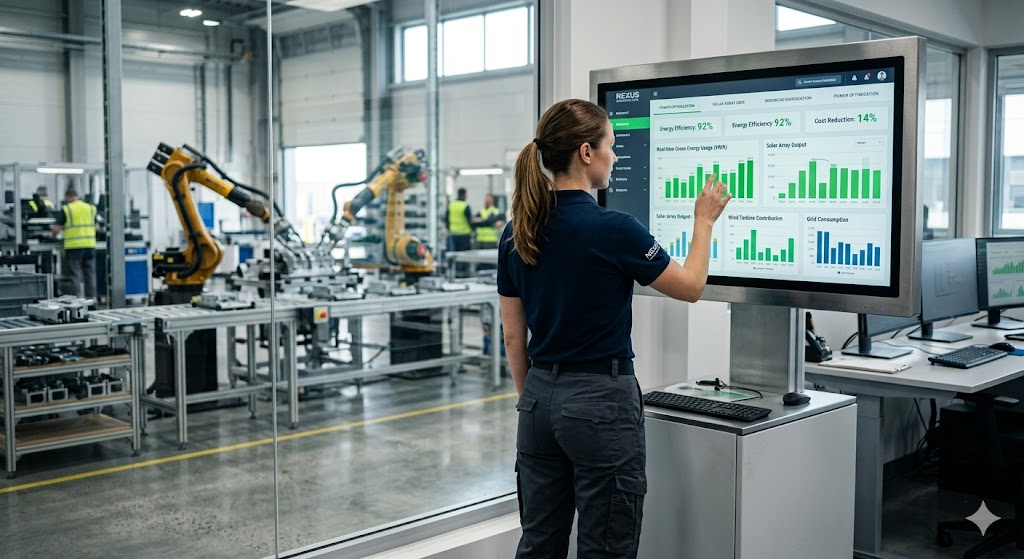
The manufacturing sector is increasingly adopting modern manufacturing software development to streamline day-to-day operations. Paper-based tracking, isolated departments, and operational guesswork are quickly disappearing. In their place, modern facilities rely on real-time data and automated processes to keep pace with industry demands. However, operating a modern factory with generic, off-the-shelf software often creates operational bottlenecks. Because every production line has unique requirements, custom manufacturing software development has become a practical necessity. Specialised digital tools do more than just update IT infrastructure they optimise workflows, improve supply chain visibility, and lower production costs. Reviewing how these tailored solutions function and how to implement them is a crucial step toward building a more efficient, data-driven factory.
What Exactly Is Manufacturing Software Development?
This type of software development simply means building digital tools that fit the exact way a specific factory operates. It acts like a central communication network that connects everyone and everything, from the parts suppliers and the factory floor to the management team. Instead of forcing employees to break their workflow for a rigid, one-size-fits-all program, this approach links different tools together to handle specific jobs.
This connected system handles all daily factory tasks smoothly without causing extra work for the staff. It organises schedules and assigns materials so production lines never stall, while also monitoring machines in real time to show exactly how much progress is being made on the floor. At the same time, the software tracks warehouse supplies automatically so the team always knows what is in stock, catches product defects early before items leave the building, and gives managers a clear, honest look at the company’s overall health without making them dig through piles of paperwork. When the software matches the actual physical work being done, it handles several daily tasks smoothly:
Production Planning: Schedules jobs and allocates materials without creating bottlenecks.
Shop Floor Tracking: Monitors machine performance through IoT sensors to catch delays as they happen.
Warehouse Management: Tracks inventory automatically so you always know what you have in stock.
Quality Assurance: Digitalises inspections to catch product defects early, before they ship.
Why Off-the-Shelf Software Fails Manufacturers
Many manufacturing firms initially turn to generic ERP systems. They seem like an easy win at first because they are quick to deploy and cover the absolute basics. However, the operational limitations surface rapidly. Generic software forces rigid workflows upon your team. Instead of the software supporting your business, your team ends up creating complex, manual workarounds just to get basic tasks done. On top of that, these systems suffer from poor integration. Your inventory software won’t talk to your accounting system, and your shop floor sensors don’t feed data into your quality reports, leaving you with massive inefficiencies and isolated islands of data.
Scalability is another major hurdle. What happens when you open a new production line, or launch a new facility near a major shipping hub like the port of Rotterdam? Generic software rarely scales smoothly, and when it tries, it usually comes with exorbitant licensing fees. Finally, using off-the-shelf software kills your competitive edge. If you and your biggest competitor rely on the exact same generic platform, you are stuck with the same features and the same limitations. You cannot out-efficient the competition using the exact same tools. When a software system doesn’t fit a factory’s precise workflow, the financial leaks pile up quickly:
The Trillion-Dollar Downtime Crisis: According to industry data from Siemens, unplanned downtime eats up roughly 11% of annual revenue for major manufacturers. When generic software fails to track machine strain or schedule maintenance properly, a single frozen assembly line drains your capital rapidly.
The “Hidden Factory” Capacity Drain: Research shows that up to 35% of a plant’s manufacturing capacity can quietly vanish into the “Hidden Factory” a term operations experts use for the minor delays, slow machine cycles, and re-work caused by poor coordination.
The 24-Hour Information Lag: Relying on basic software or manual spreadsheets introduces an inherent 1% error rate that compounds over time. Even worse, it creates a 24-to-30-hour delay between what happens on the factory floor and when management actually sees the data. Essentially, you end up trying to steer a fast-moving business using yesterday’s data.
Key Benefits of Custom Manufacturing Software
Investing in a tailor-made digital platform moves your business from a reactive state to a proactive powerhouse. Custom software changes how a company handles daily disruptions by shifting operations from a reactive state to a proactive powerhouse. Managers no longer have to wait for a machine to break down and halt the entire assembly line; the system tracks equipment wear and schedules repairs during normal downtime instead. Supervisors can spot potential bottlenecks hours before they cause delays, which allows the team to adjust schedules smoothly. This constant stream of clear information removes the guesswork from the factory floor and keeps production moving without unexpected stops.
The biggest victory comes from perfect-fit process integration:
A custom solution eliminates operational silos completely. Your sales team’s CRM can automatically trigger a production order on the shop floor, which then automatically reserves parts from your inventory management system. Because data is entered once and updates everywhere instantly, you can finally say goodbye to duplicate data entry and conflicting spreadsheets.
This setup drives radical efficiency and automation:
Custom software quietly handles the repetitive, low-value tasks that drain your team’s energy. The system can monitor inventory levels and automatically generate purchase orders when stock runs low. Furthermore, an advanced planning module can analyze active orders, available materials, and machine schedules to create the most efficient production workflow possible, drastically reducing idle time.
Real-time data also means you stop managing your business by looking in the rearview mirror. Custom dashboards can track the exact metrics that matter to you, whether that is Overall Equipment Effectiveness (OEE) or scrap rates by shift.
By integrating IoT sensors, your software can monitor machine health, alert maintenance teams to potential failures before they happen, and even optimize power consumption during peak hours. This turns costly emergency breakdowns into planned, low-cost maintenance while slashing utility costs. For example, we built an industrial ventilation control platform for Plymovent to achieve exactly this kind of real-time efficiency.
Lastly, you get unmatched scalability. You don’t have to build a massive, expensive system all at once. You can start by solving your biggest bottleneck today, such as inventory tracking, and layer on new modules like quality control as your business grows. When you introduce a new product line, a custom system easily adapts to the new workflows, keeping your business agile.
The Manufacturing Software Ecosystem
When we look at a modern factory, a comprehensive custom project usually involves building or connecting a few core pillars:
- Enterprise Resource Planning (ERP) acts as the master system handling your core business functions, including finance, HR, sales, and purchasing.
- The Manufacturing Execution System (MES) serves as the brain of the shop floor, monitoring work-in-progress, tracking machine hours, and guiding operators through daily shifts.
- Supply Chain Management (SCM) controls the entire flow of goods, providing transparency from raw materials to customer delivery.
- Quality Management Systems (QMS) digitalize your inspections, track non-conformance, and handle complex compliance paperwork like ISO 9001.
- Product Lifecycle Management (PLM) tracks a product’s entire journey, keeping managing engineers aligned from initial CAD designs and prototypes all the way through retirement.
A successful software project rarely requires replacing everything at once. More often, it involves building custom connectors that finally get all these legacy systems talking to one another.
How to Choose the Right Engineering Partner
Getting the software right depends entirely on finding the right development team. You don’t just need developers who can write code; you need engineering partners who deeply understand industrial operations. When vetting potential partners, find out if they speak the language of manufacturing. They should intuitively understand concepts like lean manufacturing, Bill of Materials (BOM), and shop floor logistics. Look closely at their past work and case studies. Even if they haven’t worked in your exact niche, they must demonstrate a track record of solving complex logistical or automation challenges.
Make sure they possess strong system integration skills, as connecting new software to old legacy hardware is often the toughest part of the job. It is also a massive advantage to choose a local or nearshore partner. Working with a team in a similar time zone who understands highly regulated environments, like the European market, ensures smooth communication and faster deployments.
Driving Real Supply Chain Transparency
To see the real value of custom programming, look at how a tailored system handles a massive hidden expense: factory ventilation and energy waste. To see the real value of custom programming, look at how a tailored system handles a massive hidden expense like factory ventilation and energy waste. Most manufacturing plants lose a significant amount of money keeping massive heating, cooling, and air filtration systems running at full blast even when certain zones are completely empty or machines are idle. Custom software solves this by connecting the factory’s live production schedule and machine sensors directly to the building’s utility controls. When a specific assembly line powers down for the day or takes a scheduled break, the software automatically dials back the ventilation and lighting in that exact section of the building. Instead of running everything on a rigid timer, the factory’s energy use matches its actual workload hour by hour, which dramatically lowers utility bills without requiring manual adjustments from the maintenance staff.
The Old Way: Blown Budgets and Sudden Shutdowns
In an old-fashioned factory using basic, unconnected equipment, the giant air filtration and ventilation systems run at 100% speed all day long. Even if your workers stop welding for a lunch break, a shift change, or a team meeting, those massive exhaust fans keep spinning at full blast, wasting thousands of dollars in electricity.
Worse, because the software doesn’t track machine health, no one knows when the internal air filters are clogged. The factory keeps running until the ventilation system completely breaks down and you lose thousands of dollars. You can read more about one of our projects for Plymovent and the 40% saving in energy costs in the following Casestudy.
Your Factory’s Future Is Custom
Investing in manufacturing software development is a practical way to help a factory run as smoothly as possible. This technology simplifies complicated daily workflows, gives managers clear data to make better decisions, and allows a business to grow without being held back by rigid tools. It is incredibly difficult to reach full productivity when employees are constantly slowed down by disconnected systems that do not match their actual tasks. Ultimately, custom manufacturing software development is a long-term investment in a company’s efficiency rather than just an IT expense. By automating repetitive tasks and optimising everything from machine schedules to utility usage, facilities can significantly lower their monthly costs and keep production running reliably. Get in Touch