

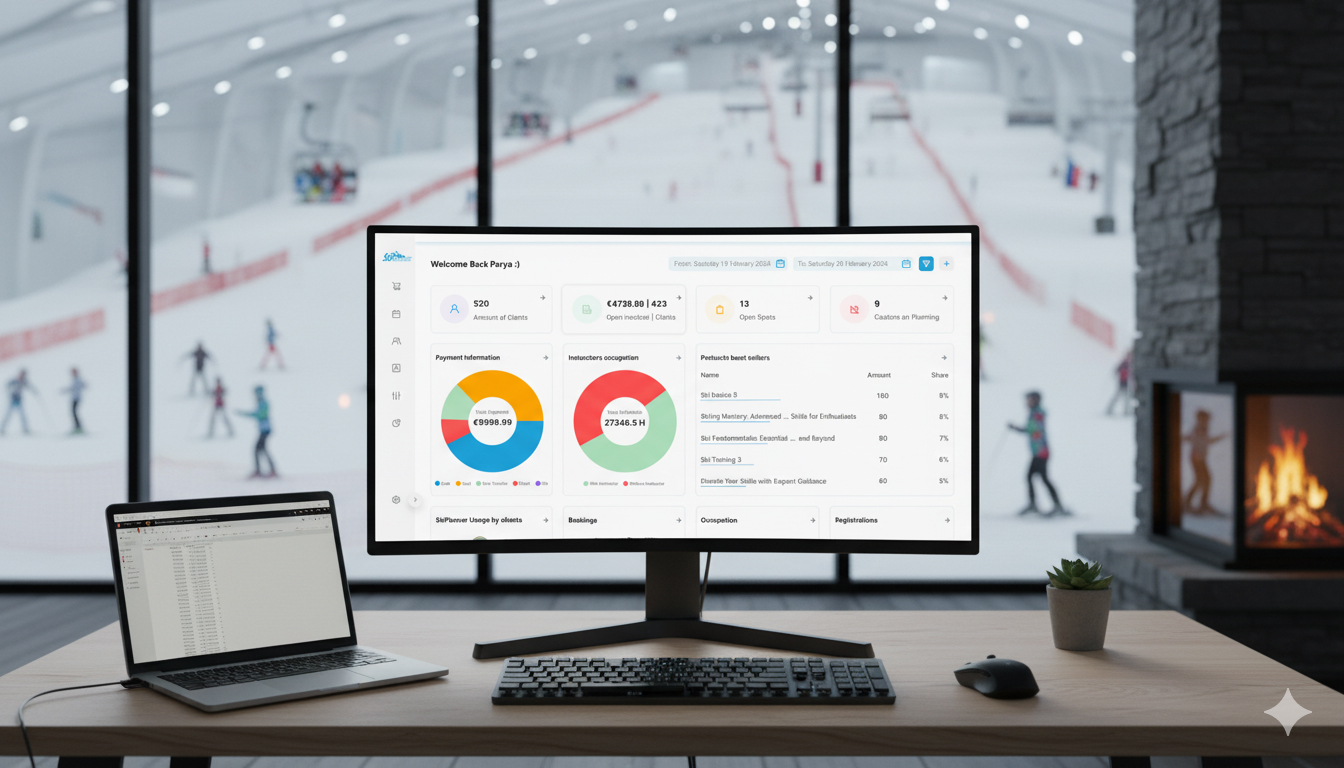
Transforming Capacity Planning into a Global SaaS Solution

Transforming Capacity Planning into a Global SaaS Solution

The Online Resource Management System for a Smarter and More Efficient Workflow

Project Summary

Skiplanner began as a highly specialised, internal capacity management and scheduling tool developed over a seven-year partnership with a prominent SnowSportCenter. The initial objective was to solve acute operational inefficiencies stemming from limited, high-cost equipment and complex scheduling logistics. Recognising the limitations of existing off-the-shelf software, the development team partnered with the client to build an intelligent system that evolved beyond simple feature implementation, culminating in a robust Software as a Service (SaaS) platform. This evolution allowed the client to turn their operational solution into an entirely new, marketable product, creating diversified revenue streams and expanding its reach internationally across Europe.

Challenge visualization

About the Client

Professional business team in meeting

The primary client, SnowSportCenter (Snow School/Ski School), operates within a cultural environment that places extreme emphasis on efficiency and cost reduction. Despite having substantial revenue, the organisational culture prioritises logical, compact, and cost-effective operations over unnecessary luxury or comfort. The centre had limited in-house personnel, often relying on a small team. Their core business challenge centred on maximising the use of specialised, limited-capacity machines.

The Challenge

Before SkiPlanner, the center's operations were inefficient and led to errors. They relied on a mix of manual tasks and separate computer systems that couldn't share information, which led to several key challenges:


Booking Inefficiencies: The booking process was inconvenient for customers and prone to errors, often leading to double-booked slots and on-site confusion.


Poor Resource Allocation: Without a centralised view, some slopes were frequently overcrowded while others remained underused, leading to wasted capacity.


Ineffective Grouping: Lumping students of varying abilities into the same class made it difficult for instructors to teach effectively and slowed down everyone's progress.


Administrative Overload: Managing instructor schedules, lesson bookings, customer data, and payments across separate systems was time-consuming and inefficient.

The Solution

The solution was not delivered as a one-time product but developed through a strategic, long-term partnership designed to eliminate all IT concerns and brainstorm future business strategies. The stages of development ensured the system solved foundational issues before evolving into a strategic asset:


Intelligent Capacity Planning: The core of Skiplanner is a system that provides intelligent suggestions regarding which individuals should be scheduled on which day, actively considering the latest changes and constraints to optimize machine utilization and instructor availability.


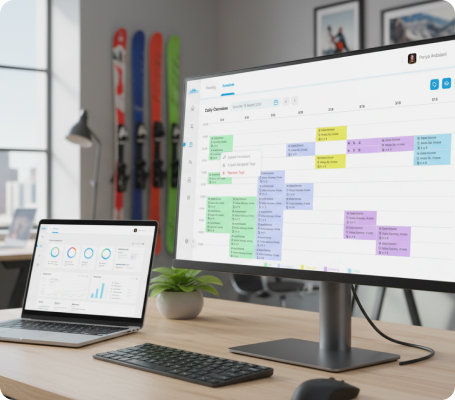
Transparency and Early Automation: The initial phase focused on providing clarity through an organized calendar, visually detailing planned schedules, personnel, and machine assignments using color coding.


Instructor Automation: The system moved beyond simple scheduling to automatically generate proposed work schedules for contract instructors, reducing coordination time.


User Empowerment and Automatic Payments: A dedicated user panel was developed, allowing customers to self-register and submit requests, reducing reliance on manual communication (email/phone). This panel later integrated features allowing users to purchase lesson packages rather than single sessions and handle payments automatically.


Proactive Business Management: To combat no-shows and last-minute cancellation chaos, the system implemented a smart notification system, sending reminders one week and one day in advance. These reminders encouraged users to confirm or quickly modify their plans, allowing the system to adjust device settings or re-arrange the entire schedule efficiently.


SaaS Platform Development: Recognising the superior functionality of the custom software, the client requested that the system be refactored into a multi-tenant SaaS platform. The platform includes a Super Admin interface to manage multiple independent ski schools.

The Outcome

The implementation and ongoing development of Skiplanner yielded profound results, transforming the operational landscape and establishing a new business model:


Strategic Partnership: The relationship evolved into a long-term (7 years) IT partnership, providing the client with high-level technical expertise and strategic business consultation, moving beyond the role of a mere software vendor.


Operational Efficiency: The intelligent system drastically reduced manual overhead by automating complex scheduling and coordination tasks previously required for managing capacity and instructor availability for tens of thousands of users.


New Revenue Stream: The successful internal tool was converted into a marketable SaaS product, providing the client with a completely new source of revenue. The system is built for scalability, offering different license tiers to various snow schools.


Global Expansion: Skiplanner transcended its initial Netherlands base and became an international platform, attracting users and schools from Europe and Kuwait.


Advanced Monetisation Features: The SaaS platform is robustly built to handle global operations, supporting features such as automatic license fee invoicing, and allowing individual ski schools to define their own payment gateways and configuration settings so that payments are deposited directly into their accounts.


The success of Skiplanner demonstrates how a deep, client-focused partnership can transform complex logistical challenges into a streamlined, automated system, turning operational necessity into a scalable commercial product. It is less a tool and more a strategic backbone for capacity-sensitive service businesses, acting like a highly efficient traffic controller, ensuring every resource (machine, student, instructor) is utilised perfectly.