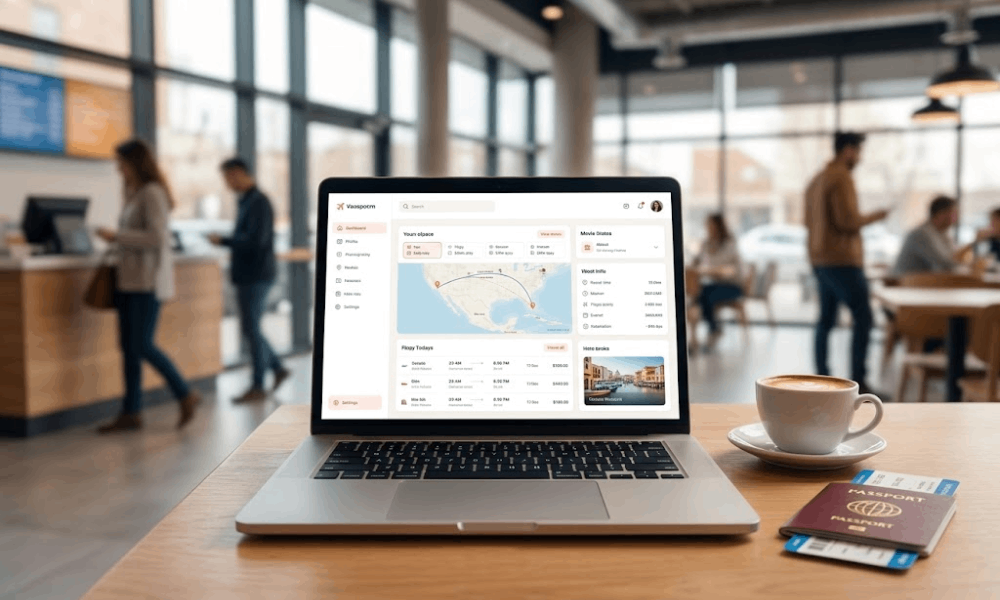
Developing travel software refers to building modular, microservices-based booking platforms, Global Distribution System (GDS) integrations, and cloud-native reservation engines tailored to a travel business’s specific supplier networks and transaction volumes. Unlike legacy monolithic portals, custom travel software development delivers full data ownership, eliminates third-party API rate limits, and provides the scalability required to handle dynamic traffic spikes during peak booking seasons.
For travel agencies, tour operators, and enterprise travel providers, replacing rigid legacy portals with modern engineering solutions is a strategic imperative. Legacy monolithic systems create operational bottlenecks, inflate maintenance costs, and slow down time-to-market for new features.
To understand the broader business impact of modernizing your technology stack, read our ultimate guide to scaling your business with travel agency software. A modern, cloud-native architecture mitigates operational risks by decoupling core booking engines, inventory feeds, and payment services, allowing travel enterprises to adapt rapidly to changing market demands.
Why Microservices Architecture is Critical for Travel Tech
Microservices architecture disaggregates large, complex applications into smaller, independent services, each managing a specific business capability. This modularity enables engineering teams to work on distinct components concurrently without breaking overall system stability.
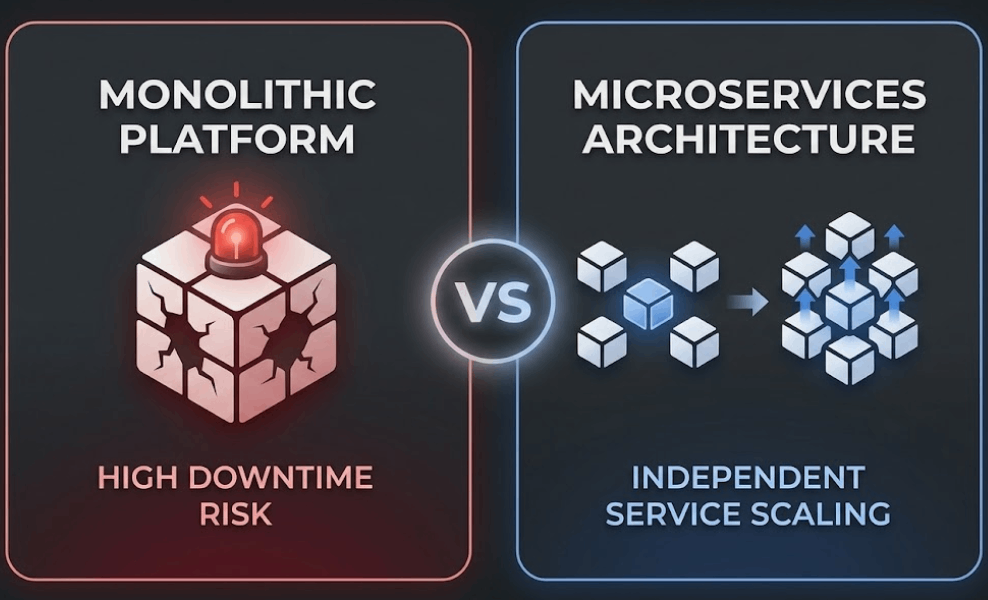
1. Independent Scaling Under Peak Load
During flash sales or peak travel seasons, high-frequency services like flight search or seat availability can scale horizontally without requiring additional resources for low-frequency services like invoice generation.
2. Enhanced System Resilience & Fault Tolerance
If a single microservice (e.g., a hotel review feed) experiences downtime, circuit breakers isolate the failure. The primary flight search and checkout pipelines continue running uninterrupted, preventing platform-wide crashes.
3. Technology Diversity & Deployment Speed
Teams can deploy updates to individual services without initiating a full platform build. Microservices also allow engineers to select optimal tech stacks per service—such as using Go or Node.js for low-latency search services and Python for recommendation engines.
Monolithic Systems vs. Microservices Travel Architecture
| Technical Metric |
Legacy Monolithic System |
Custom Microservices Architecture |
| System Scalability |
Requires scaling the entire application infrastructure |
Scales individual microservices independently (e.g., Search Engine) |
| Deployment Cadence |
High-risk, scheduled releases; full application re-builds |
Continuous Integration (CI/CD); independent service deployments |
| Fault Isolation |
Single-point-of-failure; a bug in one module crashes the app |
Isolated fault boundaries using circuit breakers (e.g., Resilience4j) |
| Supplier Integration |
Tightly coupled code; schema updates break booking flow |
Decoupled API Gateways with standardized data normalization |
How to Structure API Integrations for Scalability
Effective API integration forms the backbone of modern enterprise platforms. When engineering complex multi-GDS and hotel inventory connections, specialized travel software development ensures real-time data exchange across flight aggregators, GDS providers, and payment hubs without throughput degradation.
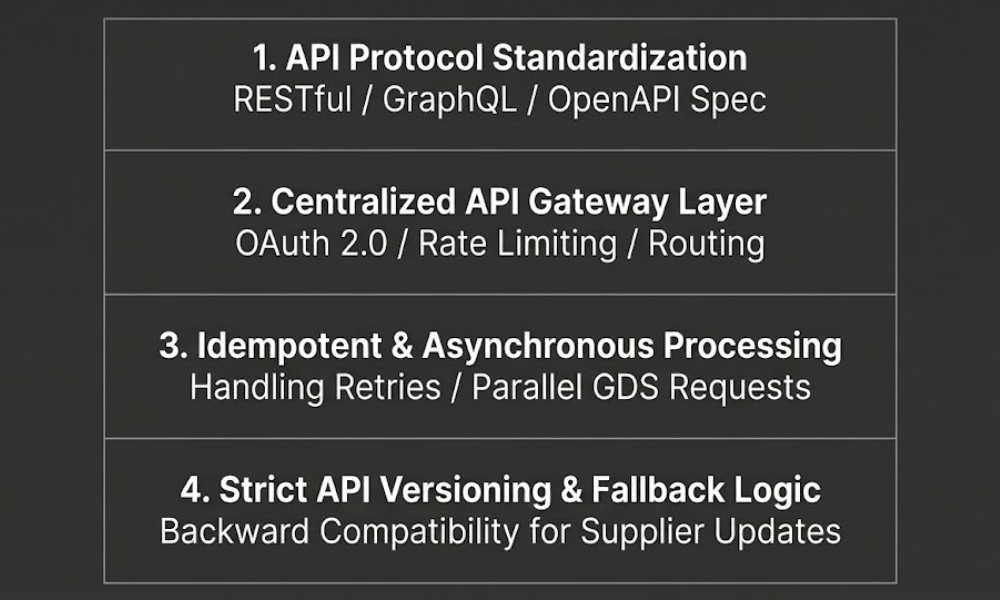
Key Integration Rules:
-
Standardize API Protocols: Utilize RESTful endpoints or GraphQL schemas to ensure flexible data fetching and low payload overhead.
-
Centralize Security at the Gateway: Implement API gateways (e.g., Kong, AWS API Gateway) to manage routing, OAuth 2.0 token validation, and IP rate-limiting centrally.
-
Design for Idempotency: Attach unique transaction keys to every booking request to prevent duplicate charges or double ticket issuance during network timeouts.
-
Maintain Strict API Versioning: Ensure backward compatibility so third-party schema updates from suppliers like Amadeus or Sabre do not break production booking flows.
Security and Compliance in Travel Software Development
Given the sensitive financial and personal identifiable information (PII) processed by travel portals, security must be built directly into the system topology from day one.
-
Data Encryption & Anonymization: Implement end-to-end encryption (TLS 1.3 in transit, AES-256 at rest) alongside tokenization for payment processing.
-
Regulatory Compliance: Adhere strictly to GDPR for customer profile retention and PCI DSS for payment gateway isolation.
-
Zero Trust & Access Control: Enforce Role-Based Access Control (RBAC) and least-privilege policies across all cloud environments and internal microservices.
-
Web Application Firewalls (WAF): Protect endpoints against common vulnerabilities (SQLi, XSS, CSRF) with automated vulnerability scanning in CI/CD pipelines.
Standard Architectural Topology for Cloud-Native Travel Systems
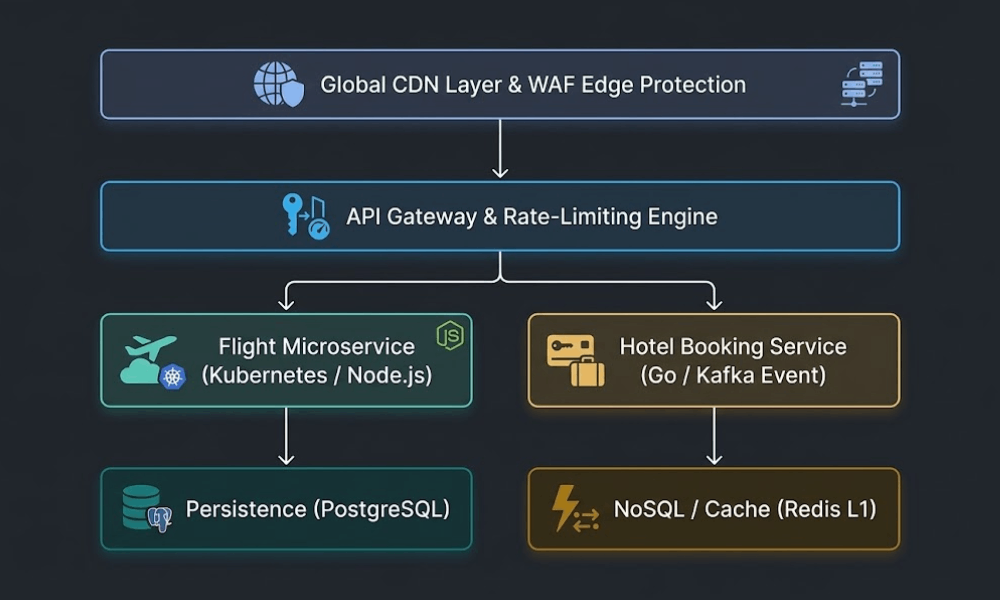
Enterprise travel platforms leverage distributed cloud infrastructure (AWS, Azure, GCP) to deliver high availability and sub-second search latencies worldwide:
-
Compute & Container Orchestration: Docker containers managed by Kubernetes clusters for automated scaling and self-healing.
-
Polyglot Persistence Layer: Relational databases (PostgreSQL) for transactional booking data, combined with NoSQL (MongoDB/DynamoDB) and distributed Redis caching for rapid search grid execution.
-
Real-time Event Streaming: Apache Kafka or RabbitMQ pipelines to process real-time inventory updates and price holds across suppliers.
-
Full Stack Observability: Centralized logging (ELK Stack), distributed tracing (OpenTelemetry/Jaeger), and metrics monitoring (Prometheus/Grafana) to maintain 99.99% system uptime.
Transitioning from Technical Debt to a Scalable Engineering Roadmap
Accumulated technical debt in legacy travel platforms inflates operational costs, slows release cadence, and risks critical outages during peak booking periods. Transitioning from reactive patches to proactive, scalable development requires an objective evaluation of your current architecture.
Bugloos provides a comprehensive Code & Architecture Audit designed to pinpoint integration vulnerabilities, evaluate GDS pipeline efficiencies, and provide a clear roadmap for modernization.
(Ready to eliminate technical debt in your booking portal? Request an Architecture & Code Audit with our technical team today.)
Frequently Asked Questions
What are the key architectural considerations for developing travel software?
Developing travel software requires a microservices-based, cloud-native architecture centered on API gateways, containerized services (Kubernetes), and polyglot persistence. This structure supports independent service scaling, low search latency, and rapid feature deployment.
How do API integrations impact travel software scalability?
Standardized API integrations allow travel platforms to connect directly with external GDS hosts, hotel inventory feeds, and payment providers. Implementing asynchronous requests, API gateways, and caching layers ensures third-party latency does not impact checkout performance.
What security measures are mandatory for travel portal software development?
Mandatory security measures include end-to-end encryption (TLS 1.3/AES-256), PCI DSS compliance for payments, GDPR data anonymization, Role-Based Access Control (RBAC), and WAF protection against XSS and SQL injection.
How does custom software development for travel agencies reduce operational costs?
Custom travel software eliminates recurring per-booking SaaS licensing fees, automates manual order processing, optimizes server infrastructure, and prevents costly downtime during high-traffic promotions.